


Best Time to Go to the Beach: Low Tide or High Tide?
In short: high tide is when the sea is at its highest level, and low tide is when it has pulled back furthest. The best time to go to the beach depends on what you want to do: low tide for shore fishing and sand yachting, a rising tide for surfcasting, and no fixed rule for sailing and surfing. Whatever the plan, always check the tide before you set off.
The essentials
| Activity | Best time | Good to know |
|---|---|---|
| Shore fishing | Low tide | The sea leaves fish, shells and shellfish behind in the sand and rocks |
| Sand yachting | Low tide | Only low tide gives you wide open stretches of sand |
| Surfcasting | Rising tide | You can cast further, and the incoming water can draw fish towards the shore |
| Sailing | Depends on your route | Water depth and tidal currents both matter |
| Surfing | Depends on the spot | Tide, but also wind and swell: ask the locals |
| Swimming and walking | Check before you go | Rip currents are more likely at low tide, and big tides can rise fast |
Packing the suitcases for a trip to the seaside, but a bit lost when people start talking about tides? This article is for you. We explain how tides work in a few words, then show you how to plan your beach and water activities around them.
The difference between high tide and low tide
High tide is the highest level of the water; low tide is when it has pulled back, leaving more sand or rocks uncovered.
Before looking at activities, a quick reminder of what high tide and low tide are.
At high tide, the sea has risen to its highest point. You can spot it when the water has covered part of the beach. At low tide, it is the other way round: the water has pulled back and leaves behind a wider stretch of sand or rocks.
Why are there high and low tides?
This happens twice a day on most coasts. If you have not yet read our article on high tide and low tide, here is the essence of it.
Tides are caused mainly by the pull of the Moon and the Sun on the Earth's oceans. The Moon is closer, so it has the stronger effect. The water rises in a bulge facing the Moon, and a second bulge forms on the opposite side of the Earth. Wherever there is a bulge, the tide is high.

Now that you know what high and low tides are, let's see how to check the state of the tide before you head to the sea.
How can you find out the state of the tide?
Before you go to the beach, ask yourself one question: is the tide coming in or going out? A tide clock or tide table gives you the answer.
Whether you are going to swim, surf or fish, the first question to ask is: is the tide high or low, and is it rising or falling?
It matters because the sea can be dangerous. The tide itself does not create rip currents, which come from waves breaking near the shore and the shape of the seabed, for example gaps between sandbars. But rip currents are more likely at low tide, and they can put swimmers in danger even on a sunny day. When the tidal coefficient is high, tides are stronger, and the sea can rise very quickly and surprise walkers who came to enjoy the low tide.
Note that tides are not the same everywhere. In some seas, such as the Mediterranean, the water only rises and falls by a few tens of centimetres, which hardly affects water sports. In the ocean or the Channel, the water can move by several metres. So always check the tide before you head to the sea.
Today, there are several tools to follow the tide: tide tables, tide clocks, tide watches, specialist websites and more.

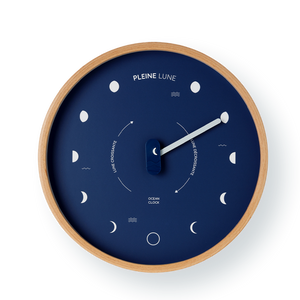
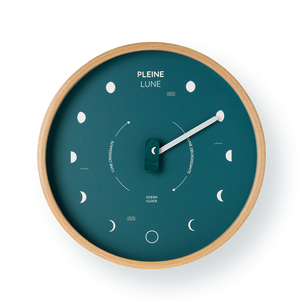
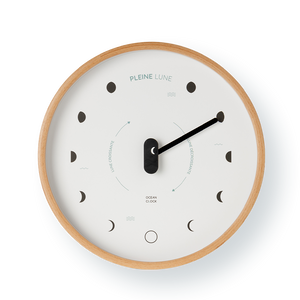
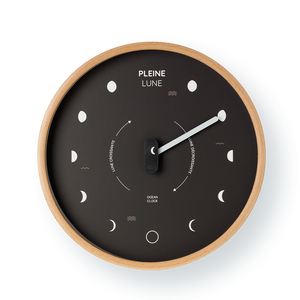
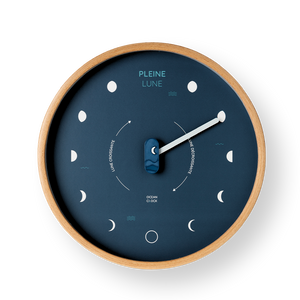
Tide clocks show on their dial how long is left before the next high or low tide. As well as giving you this key information for your trips to the sea, they have become decorative must-haves thanks to their modern design. Easy to use, they help you plan your day at a glance without leaving the house.
Which activities suit which tide?
Low tide suits shore fishing and sand yachting, a rising tide suits surfcasting, and for sailing and surfing it depends on the place.
Eyes on your tide clock, you are wondering when is the best time to go to the beach, low tide or high tide? The answer is simple: it depends on what you want to do and where you are.
At low tide: sand yachting and shore fishing
Some activities only work at a certain point in the tidal cycle. Low tide suits activities on the beach itself. Sand yachting, for example, needs wide open spaces to let the wind carry you along, and only low tide gives you broad stretches of sand to roll across at speed.
Shore fishing, popular with holidaymakers and locals alike, is also done at low tide. As the sea pulls back, it leaves behind fish, shells and shellfish that were hiding in the sand or rocks.
On a rising tide: surfcasting
If you prefer angling, many anglers wait for the tide to rise to try surfcasting. This technique means fishing from the shore by casting a line with a long rod. On a rising tide, you can cast further and let the water cover your fishing zone. The incoming water can also carry food towards the shore, which attracts fish both small and large.

Sailing and surfing: no single rule
For those who dream of sailing, there is no fixed rule about tides. Many things come into play, especially the water depth and the tidal currents. You will need to adapt your route to the tide times, because some passages cannot be used depending on the currents and the state of the tide.
Fancy a surf? Again, there is no perfect timing: every spot has its own character. Check the tide before your session, but also keep an eye on other surfing conditions such as wind and swell. Before you take on the waves, it is best to ask the locals which spot suits your level, so you can enjoy your ride to the full.
You are now ready for a summer that runs to the rhythm of the tides!
Keep exploring: how to read tide times, family activities at low tide and riptides and how to swim safely.
Keep an eye on the tide


Frequently asked questions
When is the best time to go to the beach, low tide or high tide?
It depends on the activity and the place: low tide for shore fishing and sand yachting, a rising tide for surfcasting. For sailing and surfing, there is no single rule.
What is the difference between high tide and low tide?
At high tide, the water has reached its highest level and covers part of the beach. At low tide, it has pulled back and leaves a wider stretch of sand or rocks uncovered.
Why are there tides?
Mainly because of the pull of the Moon and the Sun on the Earth's oceans. The Moon, being closer, has the stronger effect.
When should you go surfcasting?
Many anglers prefer a rising tide: you can cast further, and the incoming water can bring food towards the shore, which attracts fish.
Why check the tide before swimming?
Rip currents, which come from breaking waves and the shape of the seabed, are more likely at low tide. With a high tidal coefficient, the sea can also rise very fast and catch walkers out.
Sources


